
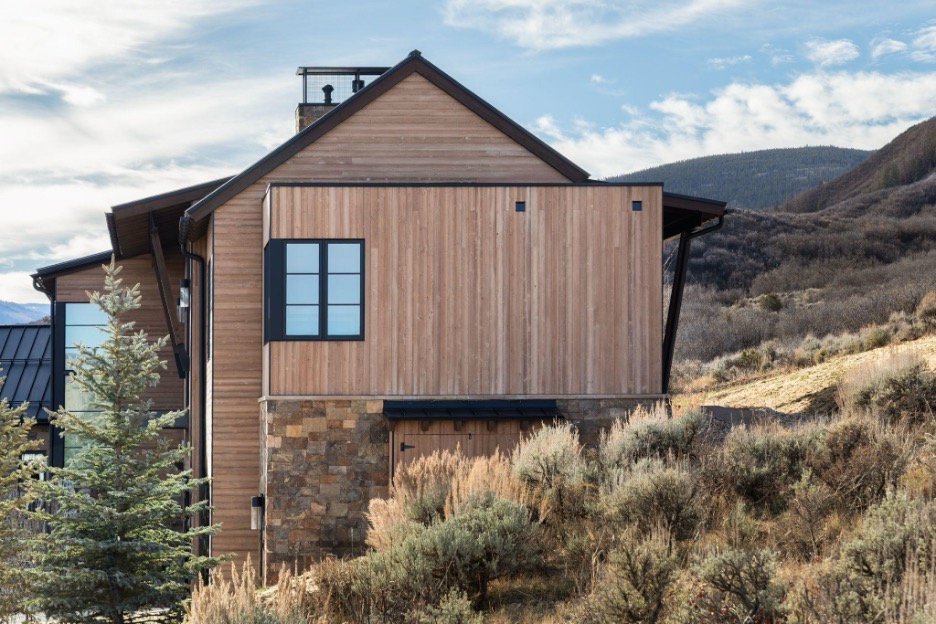
Thermally modified wood has become much more common in exterior architecture, but we still get plenty of questions about what the term actually means.
Is it treated wood? Is something added to it? Does it still move like regular lumber? Does it need to be maintained?
The short answer is that thermal modification changes the wood itself. By exposing lumber to carefully controlled high temperatures, the process reduces how readily the wood absorbs moisture and improves its dimensional stability.
At Vintage Woods, we use a controlled vacuum thermal modification process that combines elevated temperatures with a low-oxygen environment. The process changes the wood itself without relying on traditional chemical preservatives.
The end product is still natural wood. It still has grain, color variation and individual character from board to board. What changes is how the material responds to its environment.
Why Moisture Is Such a Big Part of the Conversation
Most of the movement we associate with wood comes back to moisture.
Wood naturally gains and loses moisture as the conditions around it change. When moisture content increases, wood expands. As it dries, it contracts. That cycle is normal, but on an exterior building it can contribute to swelling, shrinking, cupping and other movement.
Thermal modification reduces the wood’s equilibrium moisture content and its tendency to swell and shrink as humidity changes. This is the primary reason the material is more dimensionally stable than comparable untreated lumber.
That does not mean thermally modified wood becomes completely inert. It is still wood and some movement should always be expected. The difference is that its response to changes in moisture is reduced.
For exterior cladding, soffit and trim, that added stability can be a significant advantage.
But moisture behavior is only part of what changes. Thermal modification also alters some of the compounds within the wood itself, which can improve its biological durability.
Why Is Thermally Modified Wood More Biologically Durable?
Thermal modification changes more than just the moisture behavior of the wood. During the process, some of the hemicelluloses and natural extractives in the wood are altered or reduced.
That matters because hemicelluloses are among the components fungi can use as a food source. With less available material and lower equilibrium moisture content, thermally modified wood is less favorable for fungal decay than comparable untreated wood.
The process also reduces certain natural compounds, including terpenes. Because some wood-boring insects use those compounds to identify suitable wood, thermally modified material can be less attractive to them.
Thermal modification does not make wood immune to biological attack, but it does change the wood in ways that improve its natural durability.
How Is It Different From Pressure-Treated Lumber?
Pressure treatment and thermal modification are very different processes.
Pressure-treated lumber generally relies on chemical preservatives introduced into the wood to improve resistance to decay and insects.
Thermal modification works by changing certain properties of the wood through heat.
Nothing about the process turns the wood into a composite or manufactured material. You still see and feel the natural grain and texture of the species being used.
That is an important distinction for projects where natural wood is a major part of the architectural design.
Why We Use a Vacuum Thermal Modification System
There are several approaches to thermal modification, and not every system operates the same way.
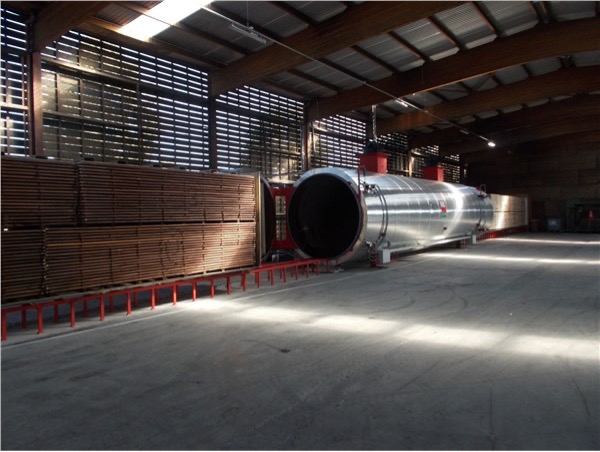
At Vintage Woods, we use a controlled vacuum environment during the modification process. This allows temperature, pressure, and the treatment cycle to be closely managed based on the species and dimensions being processed.
That control matters because different species and board sizes respond differently to thermal modification. The goal is not simply to expose lumber to heat, but to create a consistent change in the material that improves moisture behavior and dimensional stability while preserving the qualities we want from natural wood.
Thermal Modification Also Changes the Appearance
One of the more noticeable results of the process is color.
Thermal modification naturally darkens the wood, creating a warmer tone throughout the material rather than simply changing the color of the surface.
From there, we can apply our finishes to achieve the final appearance specified for a project.
Natural variation will still be present. Grain, density and other characteristics vary from one board to another, and those differences can influence how individual pieces look after thermal modification and finishing.
For many projects, that variation is part of the appeal of using real wood.

Will Thermally Modified Wood Still Weather?
Yes.
Thermal modification improves moisture-related performance, but it does not stop UV exposure from affecting the surface of the wood.
Wood exposed to sunlight will change color over time. If it is allowed to weather naturally, it will gradually move toward a silver-gray appearance.
It is also important to understand that a building rarely weathers uniformly.
A south- or west-facing wall may receive substantially more sunlight than a north-facing elevation. Areas beneath deep roof overhangs may receive very little direct weather exposure. Snow, landscaping, roof runoff, shade and airflow can create different conditions even within the same elevation.
Because of that, it is completely normal for different areas of a building to weather at different rates.